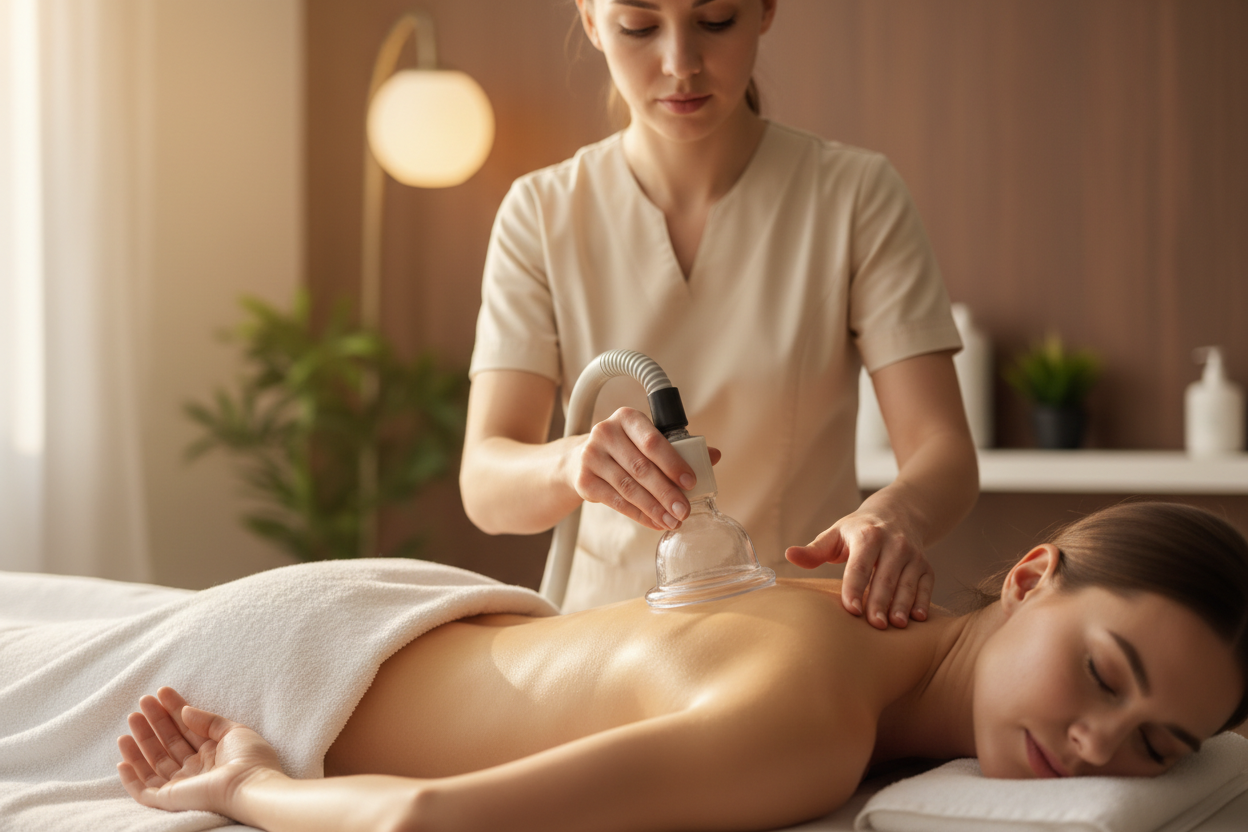
The current state of the vacuum skin massage market
“I’ve heard vacuum massage is just for cellulite.” It’s a phrase you’ll hear in spas, at beauty counters, and even in online forums. And while cellulite reduction is the most famous application, the reality is far richer. Over the past few years, the vacuum skin massage market has evolved from a niche clinical tool into a mainstream staple — both in professional clinics and as a growing category of at-home devices. Demand is driven by a broader awareness of non-invasive body contouring, lymphatic health, and skin rejuvenation. Today, the technology is used not only for cellulite treatment but also for post-surgical recovery, muscle relaxation, and even facial rejuvenation.
Professionally, vacuum therapy devices like Endermologie (LPG) have long been the gold standard, with decades of clinical use behind them. But the market has fragmented: standalone suction machines, combined radiofrequency (RF) and vacuum devices, and portable handheld units now compete for attention. The key difference between professional and at-home devices lies in suction power, treatment protocols, and the ability to target deeper tissue layers. Professional machines typically offer higher negative pressure, programmable settings, and multi‑handpiece systems, while home devices prioritize ease of use, safety, and affordability. The result is a two‑tier ecosystem where aesthetics professionals and consumers alike must navigate a growing array of options — and marketing claims.
Key players and solutions at a glance
To help you cut through the noise, here’s a comparison of the most prominent vacuum skin massage brands and solutions. Keep in mind that pricing and features vary by region and distributor, but the table below gives a solid overview.
| Brand / Device | Type | Key Features | Typical Price Range | Best For |
|---|---|---|---|---|
| LPG Endermologie | Professional (clinic‑grade) | Motorized rollers + suction; patented “Endermologie” protocol; FDA‑cleared | €15,000 – €30,000+ | Cellulite reduction, body contouring, skin firming |
| VacuShape | Professional / salon | Suction cup + RF combination; adjustable intensity | €3,000 – €8,000 | Lymphatic drainage, post‑surgical recovery, cellulite |
| Silhouette (by DermaSonic) | Professional / home‑use | Multi‑cup system; interchangeable heads; silicone cups for sensitive skin | €800 – €2,500 | Facial vacuum therapy, mild body contouring |
| ReFa Carat (MTG) | Home‑use | Handheld micro‑current + suction; battery‑powered; compact design | €150 – €300 | Facial lifting, lymphatic drainage, daily maintenance |
| VacuActiv (generic) | Home‑use | Basic suction cup; manual or electric; low cost | €30 – €100 | Introductory at‑home use, temporary relief of muscle tension |
This is not an exhaustive list — new brands appear regularly — but it covers the spectrum from heavy‑duty clinical machines to affordable consumer gadgets. The choice depends on your budget, treatment goals, and whether you’re a professional or a home user.
Non‑obvious upsides few people know about
Beyond the well‑marketed promise of smoother skin, vacuum skin massage offers several hidden benefits that deserve attention.
Lymphatic drainage that actually works
Manual lymphatic drainage is a time‑consuming, skilled technique. Vacuum therapy, when applied correctly, can mimic the pumping action that stimulates the lymphatic system. The gentle suction encourages the movement of interstitial fluid toward lymph nodes, reducing puffiness and supporting the body’s natural detoxification process. This is especially valuable after surgery, during hormonal bloating, or for anyone who holds water in their legs or face. Many practitioners report that clients notice a visible reduction in facial puffiness after just one session — something that goes far beyond “cellulite treatment.”
Improved circulation and oxygen delivery
The rhythmic suction and release of vacuum massage creates a temporary pressure gradient that dilates blood vessels underneath the skin. This increases blood flow to the treated area, delivering more oxygen and nutrients while flushing out metabolic waste. The result? A healthy, post‑workout glow that can last for hours. For clients with poor circulation or sedentary lifestyles, this can be a genuine wellness boost, not just a cosmetic fix.
Skin tightening without knives
While many people associate vacuum massage with fat and cellulite, the mechanical stress on the dermis triggers a natural wound‑healing response. Fibroblasts are stimulated to produce more collagen and elastin. Over a series of sessions, the skin becomes firmer and more resilient. This is why vacuum therapy is increasingly used for non‑surgical face lifts — especially around the jawline and cheeks. The effect is subtle but cumulative, making it a popular adjunct to microneedling or radiofrequency treatments.
“The real value of vacuum skin massage isn’t in what it removes — it’s in what it activates: your body’s own repair mechanisms.”
— Aesthetician with 15 years of experience in lymphatic care
Muscle recovery and pain relief
Athletes and physiotherapists have long used cupping therapy for muscle tension. Vacuum skin massage offers a gentler, more controlled version of the same principle. The suction lifts and separates fascia, reducing adhesions and improving range of motion. For clients with chronic back tension or post‑workout soreness, a few minutes of vacuum massage on the shoulders or hamstrings can be surprisingly effective. This is a hidden upside that rarely appears in beauty marketing, yet it’s one of the most practical benefits.
Trends shaping the future of vacuum skin massage
The vacuum therapy market is not standing still. Several emerging trends are reshaping how both professionals and consumers use the technology.
Combination devices (RF + vacuum + LED)
Pure vacuum devices are becoming less common as manufacturers integrate complementary technologies. Radiofrequency (RF) heats the dermis to stimulate collagen, while vacuum pulls the tissue closer to the RF applicator, improving energy delivery. Some devices now add LED light therapy (red for anti‑aging, blue for acne) in the same handpiece. The result is a multi‑modal treatment that addresses texture, tone, and circulation in one session. This convergence is especially popular in medi‑spas and high‑end salons.
The rise of home‑use devices
Driven by the pandemic and the growing “spa‑at‑home” movement, affordable vacuum massage devices for home use have exploded on e‑commerce platforms. While they can’t match professional suction power, many offer enough intensity for maintenance between clinic visits. The trade‑off is safety: users must be careful to follow instructions to avoid bruising or over‑suction. Brands are responding with app‑guided treatments and automatic shut‑off features.
Cryo‑vacuum fusion
Cold therapy (cryo) combined with vacuum is a niche but growing trend. The idea is to use cold to reduce inflammation and numb the area, while the vacuum stimulates circulation and lymphatic drainage. Early adopters report that the combination can be especially effective for post‑surgical swelling or for clients who are prone to bruising with traditional vacuum therapy. Expect to see more hybrid devices enter the market in the next two years.
What to watch: risks and red flags
No treatment is without potential downsides, and vacuum skin massage is no exception. Here are the key risks to keep in mind — whether you’re a professional buying a device or a consumer booking a session.
- Improper technique can cause bruising and pain. Leaving the suction cup in one spot too long, using too high a pressure on sensitive areas, or moving too quickly can lead to petechiae (tiny red dots) or deeper bruises. Professionals should be trained in proper hand speed and pressure modulation.
- Insufficient practitioner qualifications. Because vacuum therapy is not regulated as a medical procedure in many regions, anyone can buy a device and offer treatments. Look for certifications from recognized bodies (e.g., ITEC, CIDESCO, or manufacturer‑specific training). A one‑day course is rarely enough to master lymphatic drainage protocols.
- Device quality varies wildly. Cheap knock‑offs may have inconsistent suction, poor sealing, or materials that cause skin irritation. For professional use, investing in a reputable brand reduces the risk of machine failure and client injury. For home use, check reviews and avoid products that lack clear safety certifications (CE, FDA, etc.).
- Contraindications are often overlooked. Vacuum therapy should not be used on areas with active infections, skin lesions, deep vein thrombosis, or over varicose veins. People with blood clotting disorders, cancer history, or during pregnancy need medical clearance first. A responsible practitioner will always ask for a health history.
Being aware of these red flags doesn’t mean you should avoid vacuum skin massage — it means you should approach it with the same caution you’d apply to any semi‑invasive treatment. The best outcomes come from informed choices, not from marketing hype.
Final thoughts
Vacuum skin massage is far more than a cellulite fad. Its hidden benefits — from genuine lymphatic drainage to skin tightening and muscle recovery — make it a versatile tool in both professional and home settings. The market now offers a wide range of options, from high‑end clinical machines to affordable consumer devices, each with its own strengths and limitations. By understanding the non‑obvious upsides, the emerging trends, and the potential risks, you can make a confident decision that aligns with your goals — whether you’re an esthetician expanding your service menu or someone looking to improve your skin health from home. The key is to separate the real benefits from the noise, and let the quality of the treatment speak for itself.
