You've probably turned sideways in front of the mirror, pressed a fingertip into the dimpled skin on the back of your thigh, and asked yourself the same question: which massage actually works for cellulite on the legs and buttocks? Maybe you've already cycled through a tube of anti-cellulite cream, watched a cupping video on social media, or wondered why the only thing you really know about lymphatic drainage is that you have lymph nodes somewhere. The options all look similar from the outside — someone touches your legs, and your skin is supposed to change.
The truth is that different cellulite massage methods do entirely different things beneath the skin, and only a few of them reach the layer where the dimpled pattern takes shape. This article ranks the five main anti-cellulite leg and buttock massage approaches — from a casual self-massage ritual to a full vacuum roller treatment — so you can match a technique to your comfort level, your budget, and the kind of result you're actually looking for.
What Counts When Comparing the Options
Before ranking, it helps to know what makes a cellulite massage worth paying for. Cellulite on the thighs and buttocks appears when tight connective tissue bands pull the skin down while the underlying fat pushes upward. The result is the familiar dimpled surface. Fluid retention and sluggish circulation can make it look even more pronounced.
So a useful anti-cellulite massage for this area needs to do at least one of two things: reach the deeper layer of tissue where the structural changes happen, or stimulate lymph flow to clear the fluid that amplifies the dimpling. Ideally, it does both. It also has to be something you can tolerate on a regular basis — a technique that leaves you bruised for days or requires a specialist you can't afford will never become a habit.
For that reason, this ranking weighs six factors: depth of tissue work, lymph flow stimulation, comfort during the session, bruising risk, cost, and whether the method works best in a salon or at home. No technique wins on all six fronts. But one offers a noticeably better overall balance than the rest.
Fifth Place: Self-Massage with an Anti-Cellulite Cream
The most accessible option also lands in last place, and that's for a reason you might already suspect.
Self-massage with an anti-cellulite cream is what most people try first. You apply the cream to the thighs and buttocks, rub it in with both hands using slow circular motions, and repeat a few times a week. It takes about ten minutes, costs very little, and a good formula leaves the skin feeling soft. Many creams contain caffeine or botanical extracts that create a temporary tightening sensation.
But the mechanical part is skin-deep. Your hands can push skin around, but they can't create the suction that lifts the underlying tissue or apply the kind of deep, focused pressure that affects the connective tissue bands. The result is a pleasant routine that maintains the skin's surface — not a treatment that changes the structure beneath it. Self-massage with cream is a maintenance step, not a standalone anti-cellulite solution.
Fourth Place: Classic Manual Massage
A classic manual massage — the kind you'd book as a full-body relaxation treatment — sits one step higher.
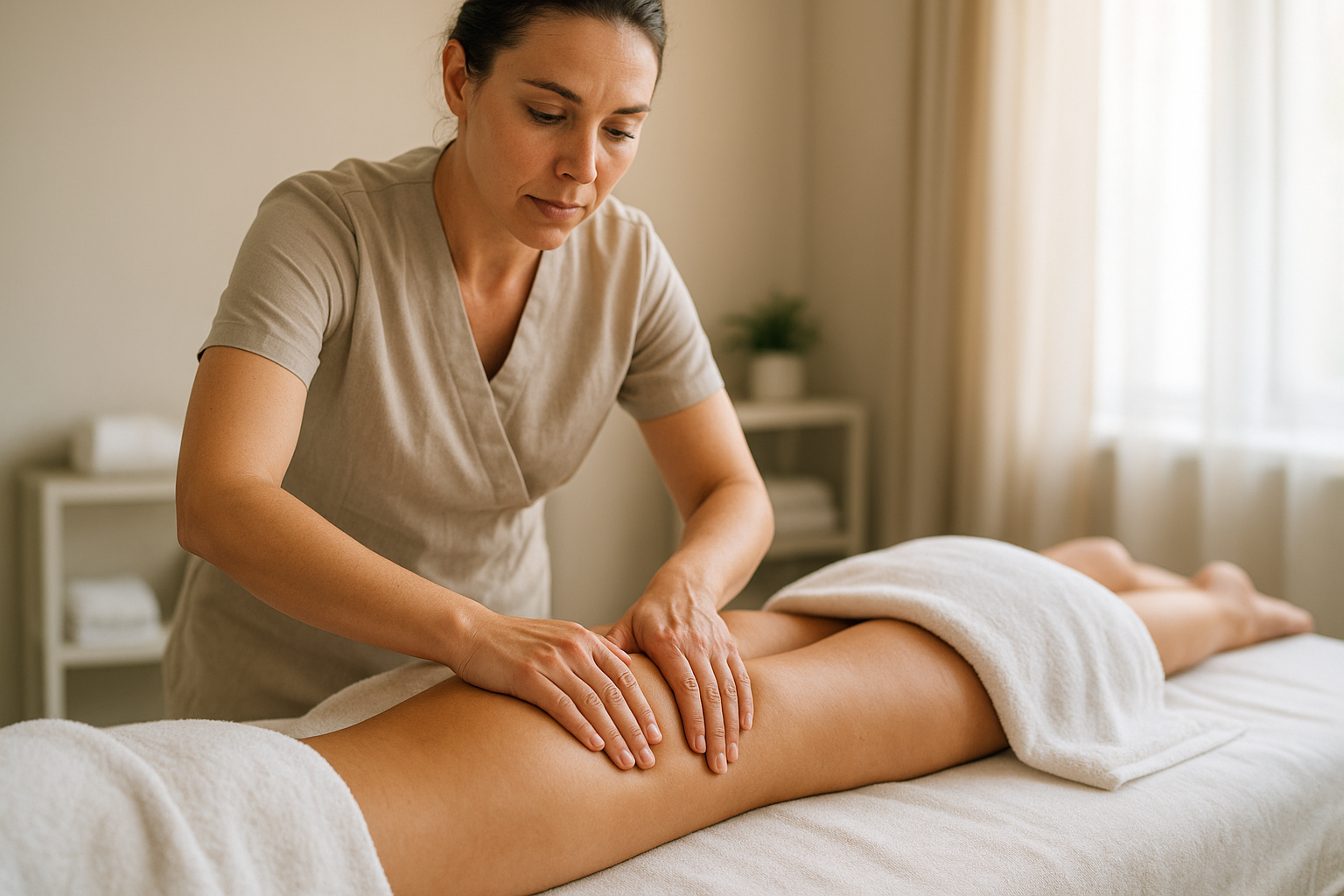
A therapist's hands can knead the calves, thighs, and glutes with genuine pressure. That improves circulation, relieves muscle tightness, and feels wonderful after you've spent days sitting in an office chair. There's a real benefit to that, and it shouldn't be dismissed.
But the effect on cellulite is modest. Hand pressure is diffuse; it spreads across the tissue in broad strokes instead of isolating the specific connective tissue bands that create the dimpled pattern. On the thighs and buttocks, where the layer of soft tissue is thick, that pressure rarely reaches deep enough to change anything visible. And unlike cupping or lymphatic drainage, classic massage doesn't systematically move lymph fluid or create suction. For the cost of a session, you're paying for relaxation and improved blood flow — worthwhile, but not a meaningful attack on cellulite.
Third Place: Cupping Massage
Cupping is where the options start to feel like a targeted treatment rather than a spa ritual.
A therapist places cups on the skin and creates a vacuum that lifts the skin and stretches the tissue beneath it. The cups can be left in place or slid along the thighs and buttocks, and the suction mechanically separates the tight fibrous bands while bringing fresh blood into the area. This is a genuinely effective method for improving local circulation, and many people notice a smoother texture after several sessions.
The downside is written on the skin afterwards. Cupping often leaves circular marks — effectively bruises — that take up to a week to fade. The severity depends almost entirely on the practitioner. A careful specialist will adjust the suction to your tolerance; a heavy-handed one will leave you with marks and little else. If you choose cupping, ask about suction levels before the session and be explicit about your bruising concerns. It's a powerful method, but the results are tied directly to the person holding the cups.
Second Place: Manual Lymphatic Drainage
Manual lymphatic drainage massage is a different animal altogether.
Instead of pressing deep into the tissue, the therapist uses light, rhythmic strokes along the lymphatic pathways, encouraging the excess fluid that accumulates in the legs to move toward the lymph nodes. The touch is surprisingly soft — you might wonder whether anything is actually happening. But by the end of a session, most people notice that their legs feel lighter and look less puffy.
That effect directly addresses the fluid component of cellulite. If your legs feel heavy in the evenings, or your thighs look noticeably worse after salty meals, lymphatic drainage will produce a visible smoothing quickly. The catch is that it works on fluid, not structure. It doesn't change the fibrous connective tissue and doesn't touch the fat underneath. So the result is real but temporary, and it's best used as a complement to a technique that does deeper work — not as the only treatment.
The Leader: Vacuum Roller Massage
Vacuum roller massage takes the best parts of everything above and puts them into one repeatable method.
The device is simple in concept: a rolling head glides across the skin while a vacuum draws the tissue upward into it. The combination of suction and kneading creates three specific advantages for the legs and buttocks:
- Coverage: the device head moves evenly over the thighs, the glutes, and the upper legs, without relying on a therapist's hand strength or your own reach.
- Depth: the vacuum lifts the tissue, so the mechanical pressure reaches the connective tissue layer instead of just squeezing the skin.
- Control: the suction level adjusts to your tolerance, making the treatment intense enough to be effective without the bruising that cupping often causes.
You'll find the method in two formats. In a clinic, a technician uses a professional-grade device — the kind associated with endermologie — and glides it across your legs and buttocks in a structured session. At home, portable vacuum roller devices use the same physical principle, giving you control over your own schedule and budget. Neither version removes cellulite permanently; no massage does. But this is the only method on the list that combines depth of tissue work, lymph stimulation, even coverage, and a tolerable, repeatable experience. That combination is why it leads the ranking.
Quick Comparison Table
Here's the complete ranking at a glance, with the main benefit, the ideal candidate, and the caveat you should know before booking a session or buying a device.
| Rank | Method | Main Benefit | Ideal Candidate | Key Caveat |
|---|---|---|---|---|
| 5th | Self-massage with anti-cellulite cream | Affordable, pleasant, easy to fit into a routine | Someone who wants a daily maintenance ritual | Only affects the skin surface |
| 4th | Classic manual massage | Improves blood flow, relaxes muscles | Someone who wants a full-body relaxation session | Limited effect on thigh and buttock tissue structure |
| 3rd | Cupping massage | Lifts and stretches tissue, boosts local circulation | Someone who tolerates marks and wants salon-grade suction | Bruising; results vary with the practitioner |
| 2nd | Manual lymphatic drainage massage | Reduces puffiness and fluid retention | Someone whose legs feel heavy or swollen | Doesn't change deeper connective tissue |
| 1st | Vacuum roller massage | Combines suction and kneading for even, deep coverage | Someone who wants visible results at home or in a salon | Requires regular sessions to maintain the effect |
The pattern is simple: the more pleasant and affordable methods stay on the surface, while the techniques that actually change the way your legs and buttocks look require either suction, lymph-focused strokes, or both. If you're just starting out, choose the option you can perform consistently for at least a few weeks — a decent method done weekly will outperform a great method done once.
The best anti-cellulite massage for your legs and buttocks is the one you'll actually repeat, not the one with the most impressive brochure.
