Context: The Clinic and Its Struggles
Three years ago, a mid-sized aesthetic clinic in a busy suburban strip faced an all-too-familiar problem: client retention was flatlining. The clinic, let’s call it Skin & Co., had built a loyal base of about 400 active customers over five years. Yet month after month, the same names appeared on the schedule for standard facials, hydrating masks, and the occasional enzyme peel. New client acquisition had stalled, and the few new faces that did walk in rarely booked a second visit.
“We were the best-kept secret nobody wanted to keep,” the clinic’s owner, a veteran esthetician, recalls. The competition told the real story. Across the street, a laser clinic offered fractionated resurfacing and IPL treatments that promised dramatic changes. Down the block, a med-spa advertised chemical peels with a week of visible peeling. Skin & Co.’s gentle facials felt outdated by comparison. Revenue had plateaued at around $120,000 per year, and the owner knew that to survive—let alone grow—the clinic needed a service that could attract new clients, encourage repeats, and command a premium price.
Problem: Why Standard Facials Weren't Enough
Skin & Co.’s existing menu of classic facials and mild exfoliation treatments checked the boxes for maintenance, but they failed to deliver the kind of visible, instant results that today’s clients crave. A standard 60-minute facial costs $85 in that market. Clients left feeling relaxed, but the skin looked only marginally brighter—if at all. After two or three sessions, many customers reported that they couldn’t see a difference. Without a measurable improvement, why would they pay $85 again when a drugstore serum promised similar effects?
The gap was clear: the clinic needed a treatment that offered tangible, immediate results without the heavy downtime associated with laser or deep chemical peels. Clients wanted to see smoother texture, reduced fine lines, and a natural glow they could show off the same day. Standard facials, no matter how well executed, simply couldn’t deliver that level of transformation. Meanwhile, laser clinics were eating into the market with expensive packages that required multiple sessions and a recovery period that many clients couldn’t accommodate.
The owner began researching alternatives. Chemical peels were too aggressive for her conservative clientele. Microcurrent devices required expensive certification and didn’t address texture. Then she stumbled upon a treatment that had been around for decades but was rarely featured in her region: diamond peeling.
Solution: Introducing Diamond Peeling as a Differentiator
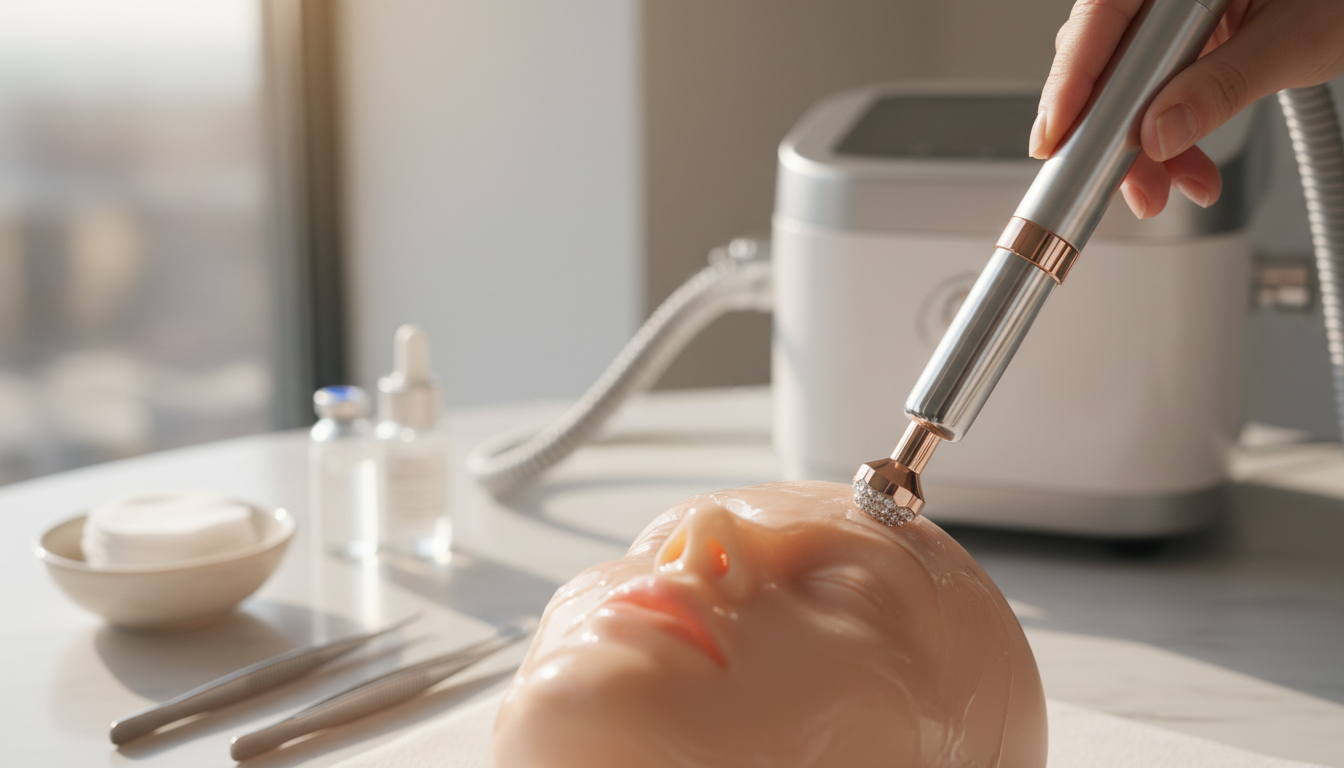
Diamond peeling is a form of microdermabrasion that uses a diamond-tipped handpiece to exfoliate the outermost layer of skin while simultaneously vacuuming away dead cells. Unlike crystal-based microdermabrasion, it produces no mess and is gentler on sensitive skin. For Skin & Co., the appeal was threefold: low equipment cost, minimal downtime, and a clear marketing angle.
The owner invested in a mid-range diamond peeling machine for about $3,000 and attended a two-day training session. She priced the treatment at $120 per session—a 40% premium over a standard facial—and marketed it as a “lunchtime glow” procedure. The messaging was direct: no pain, no peeling, just instant radiance. She bundled the service with a post-treatment hydrating serum to boost perceived value and created a package of four sessions for $400, positioning it as a skin-resurfacing course.
Marketing focused on social media before-and-after shots taken immediately after treatment. The clinic also ran a “Try One, Save on the Next” promotion to overcome initial hesitation. Within the first month, ten existing clients booked a diamond peeling session. The results were immediate and shareable. Clients posted selfies with captions like “No filter needed.” Word spread, and the skin resurfacing business began to grow.
“We didn’t just add a treatment—we introduced a reason for clients to come back and to bring their friends.” – Clinic owner
The table below compares how diamond peeling stacked up against the clinic’s existing services and the local competition.
| Treatment | Downtime | Immediate Results | Client Satisfaction (1–5) | Price |
|---|---|---|---|---|
| Standard facial | None | Low | 3 | $85 |
| Chemical peel (light) | 2–3 days peeling | Medium | 4 | $150 |
| Diamond peeling | None | High | 4.8 | $120 |
Result: Revenue, Retention, and Reputation
Within six months, diamond peeling transformed Skin & Co.’s bottom line. The treatment quickly became the clinic’s best-selling service, accounting for 35% of all bookings. Overall revenue jumped by 40%—from an annualized $120,000 to $168,000—driven almost entirely by the new offering. More importantly, the aesthetic treatment profitability of this single service allowed the clinic to reinvest in two more treatment rooms and an additional part-time esthetician.
Client retention saw a dramatic shift. Repeat bookings for diamond peeling clients hit 25% above the clinic’s historical average. Many clients who had previously come in once every three months now scheduled a diamond peeling session every four weeks. The “instant glow” effect created a natural upsell path: clients who bought the four-session package often added a serum or a hydrating facial between peels. Online reviews changed too. The clinic’s average rating climbed from 4.0 to 4.6 stars, with nearly every positive review mentioning the word “glow” or “amazing results.” New client inquiries tripled in the months following the launch.
The owner estimates that the initial $3,000 equipment cost was recouped within the first two months. “I wish I had done this years ago,” she says. “It solved my biggest problem: people not coming back. Now they book their next session before they leave the room.”
Takeaways: Lessons for Other Clinics
Skin & Co.’s experience offers a replicable blueprint for any clinic struggling with stagnant revenue and low client loyalty. Here are the key lessons:
- Start with a pilot program. Introduce diamond peeling as a limited-time offer to existing clients. Collect feedback and refine your technique before launching wide-scale marketing. Skin & Co. tested the service with ten loyal clients first, which built confidence and word-of-mouth.
- Bundle strategically. Rather than selling single sessions, create packages that encourage commitment. The four-session course at Skin & Co. increased the average transaction value by 68% compared to individual bookings.
- Emphasize the “no-pain, instant glow” message. The biggest barrier to trying new treatments is fear of pain or downtime. Diamond peeling’s biggest competitive advantage is that clients can return to work immediately with refreshed skin. Use before-and-after photos taken in the same lighting to prove the result.
- Integrate with existing services. Diamond peeling can be a standalone treatment or a complement to facials, LED therapy, or microneedling. Cross-selling increases the lifetime value of each client.
- Track what matters. Monitor clinic revenue growth per service, repeat purchase rate, and client acquisition cost. In Skin & Co.’s case, the data clearly showed that diamond peeling had the highest return on investment of any new service added in the previous three years.
This case study is not an outlier. Across the aesthetic industry, clinics that adopt diamond peeling as a cornerstone service report similar improvements in client satisfaction and financial performance. The key is execution—investing in proper training, crafting a clear value proposition, and letting the results speak for themselves.
For clinic owners still on the fence, the takeaway is simple: you don’t need to overhaul your entire menu. Sometimes one well-chosen treatment can change everything. Diamond peeling gave Skin & Co. a reason for clients to return, a story to tell, and a profit margin that made the investment more than worthwhile.
