Do you usually go straight to a classic massage when your body feels heavy or your legs look puffy? If so, you might be missing what an entirely different category of treatment can do.
Many wellness clients overpay for manual sessions when a machine would actually serve them better. Others skip device-based body treatments altogether because they're not sure what a hardware body massage really involves. The sensations, the risks, the timing — it all feels a bit unknown. Has that kept you from booking?
What exactly is hardware body massage?
Hardware body massage is a broad name for treatments in which a machine performs the main physical work instead of — or alongside — the therapist's hands. The device delivers mechanical energy in the form of pressure, suction, vibration, heat, or electrical impulses, and it can reach layers that hands often cannot maintain depth in for long.
You have probably seen some of these devices without knowing what they are called:
- Pressotherapy — inflatable sleeves that squeeze the legs, arms, or waist in rhythmic waves.
- Vacuum massage — a handpiece that pulls the skin upward and rolls it over the tissue.
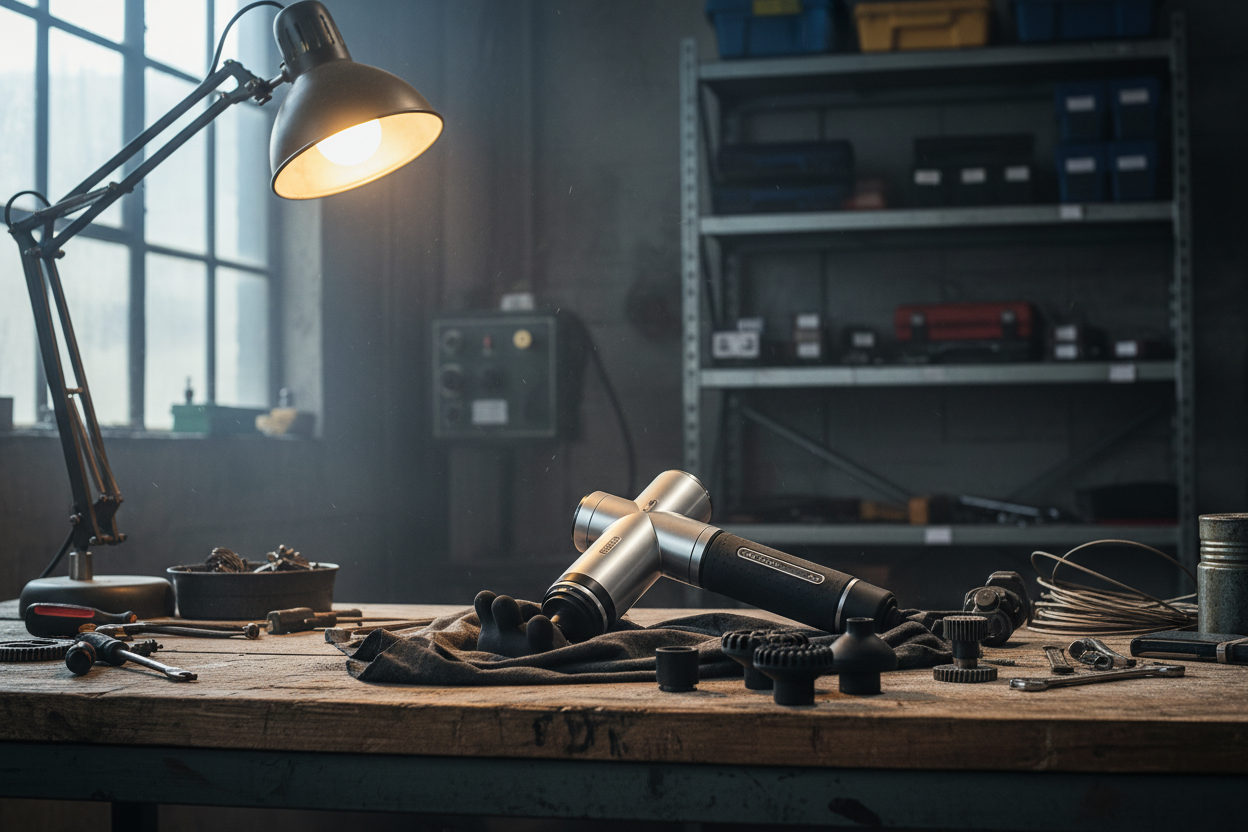
- Percussion massage — a handheld device that knocks on muscles with rapid taps.
- Radiofrequency — a head that heats the deep layers of the skin.
- EMS — electrodes that make the muscles contract on their own.
In a professional setting, the machine doesn't work alone. The specialist chooses the head, the intensity, and the movement pattern, and adjusts them to your tissues during the session. That combination of human judgment and mechanical power is what makes device-based body massage different from a vibrating chair in a gym.
How is hardware body massage different from a classic manual massage?
The quickest way to put it: a manual massage depends on the therapist's hands, while a machine body massage depends on a calibrated device that keeps the same force from the first minute to the last.
Hands are intelligent — they feel tension, temperature, and tiny changes in the tissue, and they adapt in real time. But hands get tired. A device doesn't. That's why hardware massage can apply deeper, more consistent pressure for longer stretches, which matters when the goal is mechanical: moving fluid, stretching fascia, or stimulating deep muscle layers.
The goals are different too. Classic massage is usually about relaxation, stress relief, and muscle tenderness. Device-based body massage is usually about lymphatic drainage, water retention, recovery after sport, skin elasticity, and the texture of cellulite-related areas.
And the sensation is completely different. Instead of kneading and slow warm strokes, you feel vibration, suction, pulsing, or tapping. None of it feels like a typical spa massage, which is exactly why so many people hesitate before their first session.
What should you feel during a hardware body massage session?
That depends on the machine, but there are some common experiences you can expect:
- Warmth (radiofrequency) — like a hot stone moving over the skin, only deeper.
- Suction and rolling (vacuum massage) — the skin is pulled and rolled; intense at first, then dull.
- Rhythmic squeezing (pressotherapy) — like a blood-pressure cuff slowly climbing up the legs.
- Buzzing or knocking (percussion) — rapid taps that are strange but pleasant once the intensity is right.
- Muscle twitching (EMS) — the muscles contract without your involvement. The most unusual sensation of all.
A small amount of discomfort is normal when the specialist raises the intensity to a working level. It should feel like a hard stretch, not like a sting, burn, or sharp electric jab. A good habit is to describe what you feel aloud. If something hurts with a sharp or burning quality, say so immediately — turn it down, don't just frown and wait for the timer.
Who benefits most from hardware body massage?
Hardware body massage isn't a replacement for classic massage, and it isn't a weight-loss trick. It makes sense when you have a specific goal in mind:
- Swollen or heavy legs — pressotherapy pushes fluid toward the lymphatic system and can make the legs feel lighter within a session or two.
- Post-workout soreness — percussion devices and EMS can help the muscles recover faster than just resting alone.
- Cellulite-related texture — vacuum and radiofrequency protocols target the tissue structure under the skin. Results appear over a course, not after one session.
- Deep tension that hands can't reach — a vacuum-based deep massage works into chronic tight spots that manual massage often strokes over.
- Preparation for a special occasion — a course of device-based shaping can firm and smooth the skin, which many clients find motivating.
Device-based body massage also works well for people who prefer a clear input — you see the intensity, you can adjust it, and the treatment is organized as a plan. What it cannot do is spot-reduce fat or replace a sane diet and physical movement. A clinic that promises otherwise is the wrong clinic.
Are there risks or contraindications with hardware body massage?
Most device-based procedures are safe when done well. But they are not for everyone, and the limits depend on the type of energy the machine uses. That's why a responsible session starts with questions about your health, not with the machine.
Tell the specialist — and if in doubt, your doctor — about any of these:
- pregnancy or recent complicated childbirth
- acute infections, fever, or active inflammation
- rashes, wounds, or skin conditions in the treatment area
- severe varicose veins or a history of blood clots
- blood clotting disorders or blood-thinning medication
- pacemakers or other electronic implants (especially important for EMS)
- recent surgery, hernias, or abdominal issues
The most common side effects are bruising and some muscle soreness, mostly after vacuum and percussion protocols. They are temporary, though the bruises might take a while to fade. Don't book a hardware body massage for a few days before a beach holiday if you don't want purple marks on your legs.
How many sessions do you need to see a visible result?
There is no single honest number, because the goal changes everything.
For drainage and puffiness, the effect can appear in the first session — your legs feel lighter and look less puffy, because excess fluid has been moved. For structural results, like skin elasticity, texture, or cellulite-related changes, one session is not enough. The tissue needs repeated, spaced stimulation to adapt. Most protocols are structured as a series of 6 to 12 sessions, one or two times a week, followed by a maintenance session every few weeks.
Watch how the clinic plans the treatment. If the first question is about how many sessions they can sell you, rather than about your goal and your health history, that's a warning sign. And keep your expectations honest: your body changes over weeks, not during one lunch break. Maintenance is where the result becomes stable.
What should you check before booking a hardware body massage?
Because device-based body massage is a blank space in many people's mental map, a few practical checks go a long way:
- Who will work on you? Look for a certified specialist with training on that specific machine, not just a general employee.
- What device is used? It should be a professional model, in good condition, and appropriate for your goal.
- Is there a consultation beforehand? If yes, good. If no, go elsewhere.
- Are contraindications discussed? Your health history should be reviewed before the first session.
- Is the protocol transparent? You should know which areas will be treated, how the intensity will progress, and how many sessions are realistic.
- Is hygiene handled properly? Contact parts and covers must be cleaned or changed for each client.
- What does the course price include? Ask what happens if you need to pause or change the plan.
That list filters out most low-quality offers and leaves room for the honest ones.
Can a home device replace a professional hardware body massage?
Home gadgets — percussion guns, handheld vacuum cups, simple leg compressors — are better than nothing. They handle light recovery, everyday stiffness, and maintenance between professional sessions. But replace a professional treatment? Let's look at the reality.
| Manual massage | Professional hardware body massage | Home device | |
|---|---|---|---|
| Depth and power | Depends on the therapist's strength | High, consistent, calibrated | Low-to-medium, with little margin |
| Main result | Relaxation, muscle tension relief | Moving fluids, deep recovery, skin and fascia work | Light relaxation and maintenance |
| Visible change over time | Temporary, hour-to-day effect | Building over a 6–12 session course | Small effect on skin and fascia |
| Who controls the outcome | The hands of the therapist | The specialist plus the machine | You and your patience |
The gap is not about marketing. A professional body massage machine is simply more powerful within a safety range, and it is operated by someone who understands tissue response, not just how to turn it on. Choose a home device if your goal is everyday recovery. Choose professional sessions if you need real mechanical change — and use a home gadget between visits to keep the result.
So, back to the beginning: the next time you choose between a classic massage and a hardware body treatment, ask yourself what goal you're actually trying to reach. Relaxation? A warm pair of hands is perfect. Swollen legs, deep recovery, skin texture, or a firmer look? A body massage machine deserves a chance. It is not a miracle, and not every device is worth your money, but now you know how it feels, how to check the clinic, and how to plan the sessions. That already puts you ahead of most people booking these treatments.
Hardware body massage isn't a harder version of manual massage. It's a different tool, built for different goals. Match the goal to the method, and the price starts making sense.
