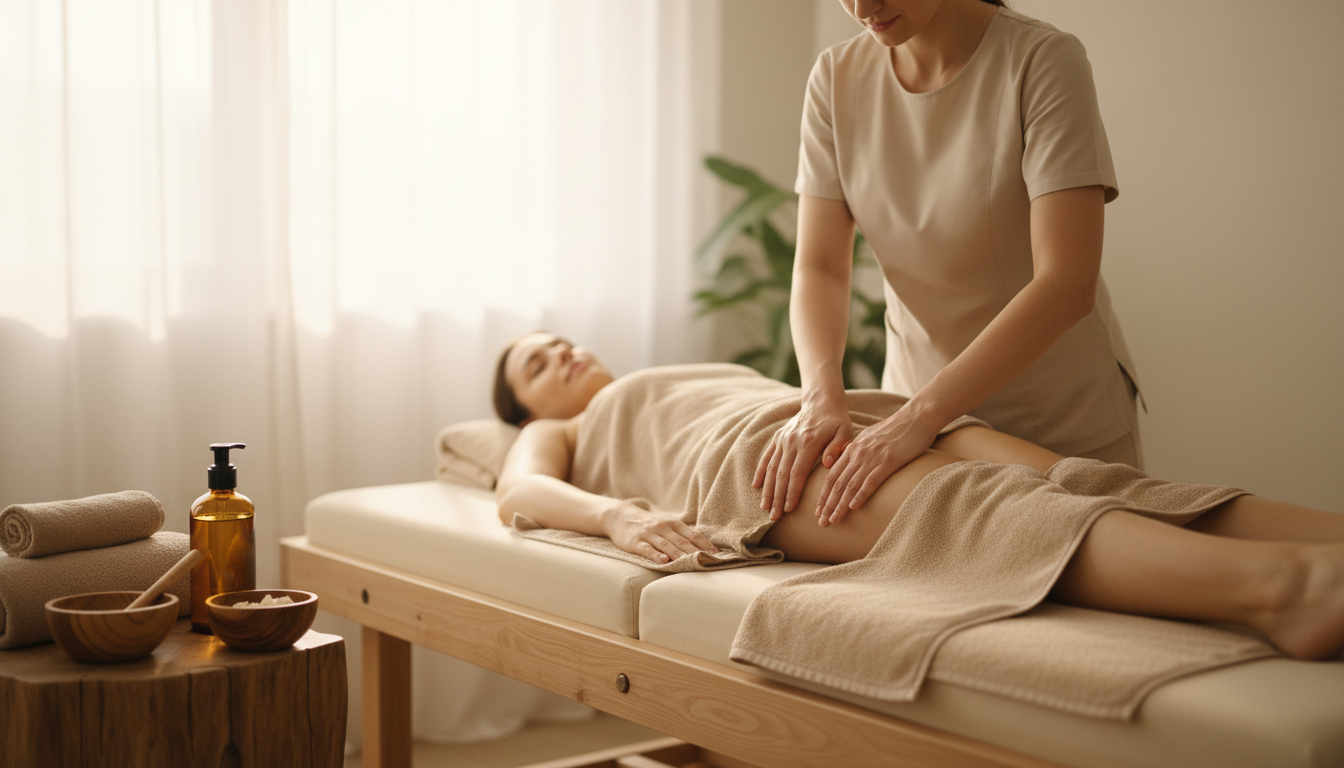
By the end of this article, you will know how to do a proper anti-cellulite massage at home — and when it is smarter to see a professional instead of guessing your way through another online tutorial.
The path is simple: first, understand why cellulite appears. Then compare the massage options that actually help. After that, learn the routine step by step. And finally, figure out how to keep the results from fading.
Why cellulite is so stubborn
If you have cellulite, you are not broken. It is one of the most common features of the human body, and it has very little to do with laziness, weight, or how many green smoothies you drank this year. It shows up on slim bodies, athletic bodies, and bodies that do everything "right."
Cellulite forms where fat pushes against the connective tissue under the skin. The structure of that tissue varies from person to person and is strongly influenced by hormones. Some people simply have the architecture for visible dimples. That is why it can feel like a personal failure when it is actually a structural trait.
It is also why it is so stubborn. The dimples live below the surface, and creams or scrubs can only smooth the top layer for a few hours. Massage is one of the few at-home methods that works at the level where cellulite actually sits — but only when the anti-cellulite massage technique is right. That is exactly where most people lose.
What is really going on under the skin
To understand how to perform a proper anti-cellulite massage, picture the layers. On top is the skin. Below it is a layer of fat. Running through that layer are bands of connective tissue that anchor the skin to deeper structures. When fat cells expand, they push upward. The stiff bands pull downward. The result is the dimpled surface you see.
Several things make the dimpling more visible:
- Connective tissue quality. With age and hormonal shifts, the fibers become less flexible, so the pull is stronger.
- Hormones. Estrogen affects fluid retention, fat storage, and collagen condition. This is why cellulite often changes during pregnancy, with birth control, or around menopause.
- Circulation and lymph flow. Sluggish blood and lymph mean more fluid retention, which makes the skin look puffier and more uneven.
- Daily habits. Water intake, movement, and nutrition all influence fluid balance and skin quality.
Now the honest part: massage cannot change your hormones or remove fat cells. But it can improve circulation, support lymphatic drainage, reduce fluid buildup, and soften the fibrous tissue that creates the dimples. That is already enough to make a visible difference — if the technique is consistent and the direction is correct.
Massage options that are worth your time
A quick search for massage for cellulite will show you dozens of tools: wooden rollers, suction cups, electric massagers, brushes. Some are genuinely useful; many are oversold. Here is an honest breakdown.
Hand massage
Your hands are free, always available, and surprisingly effective once you learn the basic strokes. Hand massage is the best starting point because it teaches you how the tissue feels and how much pressure works for your body. The downside is that it takes about ten minutes of focused effort, and many people quietly skip that.
Dry brushing
A dry brush exfoliates the skin, boosts surface circulation, and makes the skin feel temporarily smoother. It is a great preparation step — but it stays on the surface. On its own, it will not reach the deeper layers where cellulite forms.
Cupping
Cupping lifts the tissue with suction, which increases blood flow and gently stretches the connective fibers. Some people love it; others end up with bruises. If you try it, use low suction and avoid staying too long on one spot. It is a tool, not a miracle.
Rollers and electric massagers
These devices make it easier to reach the back of the thighs and keep the pressure even. They work well when used slowly, with oil, and with the goal of working the deeper tissue. The common mistake is rushing over dry skin and expecting immediate results.
Professional treatments
A good professional session teaches you what proper technique feels like and reaches areas that are hard to treat yourself. The cost is real, though, and the results still depend on what you do between sessions. One salon visit will not undo years of stagnation.
Pick one option and stay with it for at least three weeks. Jumping between methods every few days gives you nothing but a drawer full of half-used products.
The right way to give yourself a cellulite massage
Here is how you can do a cellulite massage at home with the correct technique.
Step 1. Warm up the skin. Take a warm shower or apply a warm towel for a few minutes. Heat relaxes the tissue, improves surface circulation, and helps the skin absorb whatever you apply next.
Step 2. Use cream or oil. You need a slick base so your hands can glide instead of dragging the skin. The exact product matters less than the motion — a simple body oil works perfectly.
Step 3. Work toward the lymph nodes. Your lymphatic system carries fluids and waste toward lymph nodes in the groin and armpits, and you want to help it move in that direction. On the legs, always massage upward from the knee toward the hip and groin. Add slow circular movements on the outer thighs and buttocks, but never rub downward, away from the lymph nodes.
Step 4. Alternate the strokes. Start with long, firm gliding strokes from the knee to the hip. Then switch to kneading: grab the tissue between your palm and fingers, squeeze gently, and release, moving along the thigh. Finish with small circular motions of the knuckles over the dimpled areas. This sequence covers the surface flow, the deeper fat layer, and the connective tissue where cellulite forms.
Step 5. Use comfortable pressure. The massage should feel deep but not painful. Bruising is not a sign of success; it is a sign of force. If you found bruises after previous attempts, you were pressing too hard.
Step 6. Stay consistent. Ten minutes of proper work three to five times a week will beat a forty-five-minute marathon once a month. Make it a habit after your shower, and it stops feeling like a chore.
Proper technique matters more than pressure or expensive tools. A simple oil, the right direction, and a regular rhythm will outperform any gadget used carelessly.
Done correctly, ten minutes is enough to cover the back of your thighs and hips properly. That is a small investment for a routine that improves circulation, reduces puffiness, and keeps the skin looking smoother.
How to keep the results from fading
A single massage session smooths the skin for a few hours because it reduces fluid retention and boosts circulation. That effect fades quickly without support. If you want the improvements to last, you need a few supporting habits.
Drink enough water. The lymphatic system and blood circulation run on hydration. Water is the cheapest companion to any massage routine — dehydration makes the skin look dull and the dimples deeper.
Move your body. The lymphatic system has no pump of its own. It depends on muscle contractions, which is why regular walks, stairs, and lower-body exercise directly support your massage results. You do not need a gym membership; you need to avoid sitting for hours at a stretch.
Keep the skin nourished. Daily moisturizing, even with a simple lotion, keeps the skin supple and less likely to look rough. The massage oil you already use counts toward this goal.
Switch to a maintenance schedule. Once you notice visible improvement — usually after a few weeks — reduce the frequency to two or three sessions per week, keeping the same technique. Stopping completely lets everything slowly slide back.
The reality is simple: a proper anti-cellulite massage is not a miracle cure. It is a practical method that improves circulation, reduces fluid retention, and softens the appearance of dimples when done correctly and regularly. Combine the technique from this article with water, movement, and realistic expectations, and you will have a routine that actually earns its place in your week.
