What defines a basic manual facial cleansing
You are standing in front of a salon menu and the price list for manual facial cleansing reads like a foreign language. One service is $45, another is $120, and both are called “deep cleansing.” The difference is not obvious. To understand what you are paying for, you first need a clear baseline.
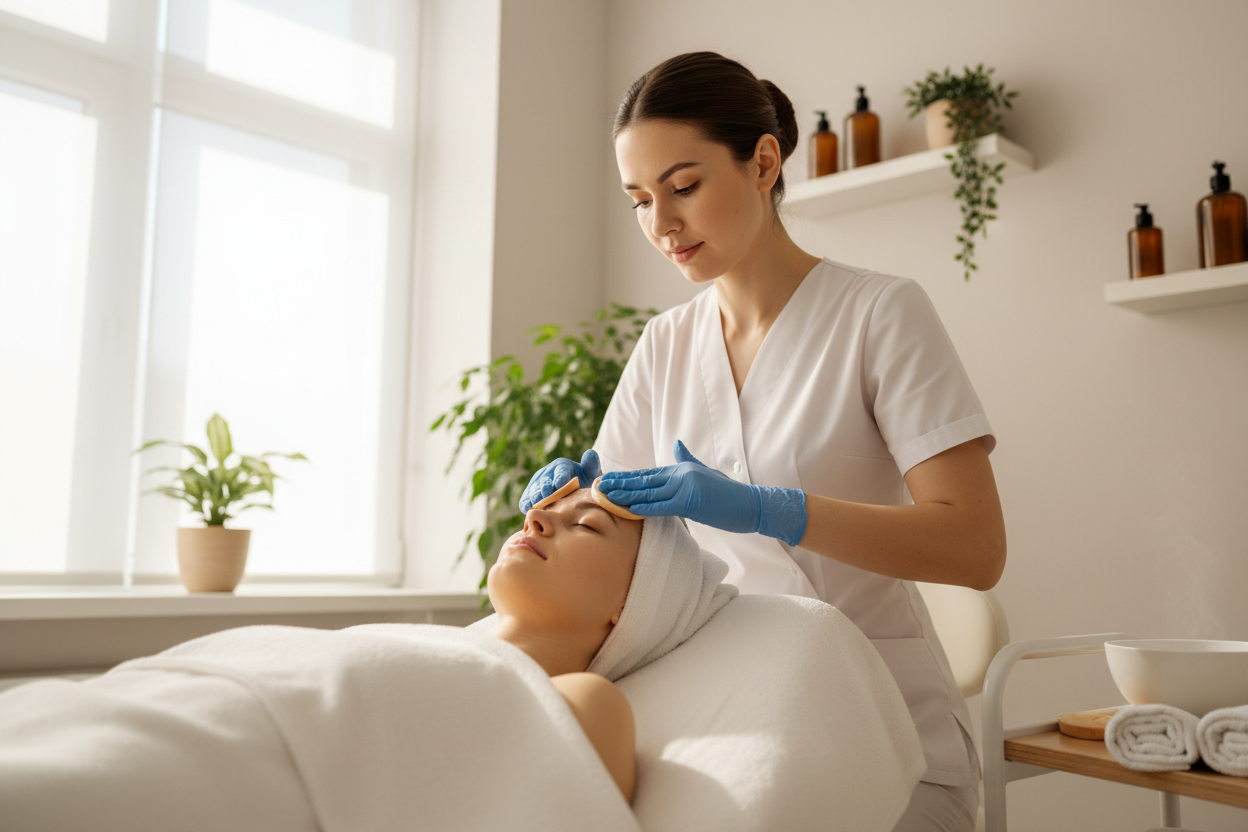
A basic manual facial cleansing typically includes a handful of essential steps: a gentle cleanser to remove surface dirt and makeup, a brief steam or warm towel to soften the skin, a light exfoliation (often a gentle scrub or enzyme peel), and a simple mask suited to your skin type. The session ends with a toner, moisturizer, and sunscreen. This core procedure usually takes 30 to 45 minutes and is performed by an esthetician or a trained therapist.
In most markets, the facial cleansing cost for this baseline service ranges from $40 to $80. The exact number depends on your location and the salon’s tier, but this range represents the simplest, most straightforward version of a professional facial. If you are a first-time client or someone with minimal skin concerns—no stubborn blackheads, no heavy congestion, no sensitivity—a basic manual facial cleansing can be a perfectly adequate choice. It gives you the deep clean you cannot achieve at home, without any bells and whistles.
A basic manual facial cleansing is the entry point. Once you understand what it includes, you can decide whether the extras are worth the upgrade.
Additional techniques and their price impact
Once you move beyond the basics, the price starts to climb. The most common add-ons are extractions, advanced steam, and specialized tools such as a dermaplaning blade or a high-frequency wand. Each of these techniques requires extra time, skill, and sometimes equipment, which directly raises the manual facial cleansing price.
- Extractions – Manually removing blackheads, whiteheads, and clogged pores. This is one of the most labour-intensive steps. A skilled esthetician may spend 10–20 minutes on extractions alone. Adding this service typically increases the total by $15–$30.
- Extended steam – Some salons use a professional steam machine for 10–15 minutes instead of a quick warm towel. The longer steam softens the skin more, making extractions easier and less painful. Expect an extra $10–$20.
- Specialized tools – Dermaplaning (a sterile blade to remove peach fuzz and dead skin), microcurrent (low-level electrical current to tone muscles), or high-frequency (a glass electrode to kill bacteria). These tools can add $30–$60 to the session.
When you see a professional facial cleansing price of $100–$150, it almost always includes at least two of these techniques. The value is real: extractions, for example, are difficult to perform safely at home, and improper technique can lead to scarring or infection. Paying for a professional who uses sterile tools and correct pressure is a worthwhile investment for many people.
However, not every add-on is necessary. If your skin is relatively clear, you might skip extractions and save money. Ask the salon what the base price includes and what each add-on costs individually. This way you only pay for what you actually need.
The role of professional-grade products
Another major factor in manual facial cleaning pricing is the quality of the products used during the treatment. A basic facial may use a drugstore cleanser and a generic cream mask. A premium facial will incorporate cosmeceutical brands—such as Dermalogica, SkinCeuticals, or Environ—that contain higher concentrations of active ingredients like hyaluronic acid, vitamin C, or retinoids.
These product lines are not cheap. A single professional-grade serum can cost a salon $30–$80 per bottle. The price of the facial reflects that cost. When you see a treatment priced at $120–$180, a significant portion covers the products applied to your skin, not just the therapist’s time.
Why does this matter? If you have specific skin concerns—acne, hyperpigmentation, dehydration, or ageing—the strength and formulation of the products can make a visible difference. A facial with a basic moisturiser and a generic mask will hydrate and clean, but it will not deliver long-term improvements. A treatment with targeted serums and medical-grade masks can address the root cause of your skin issues. That said, if you are only looking for a quick refresh, paying for premium products may be unnecessary.
Location, salon reputation, and service tier
Beyond the treatment itself, the environment and the expertise of the professional heavily influence the price. Factors affecting facial cleansing price include:
- Geographic area – A facial in a major city like New York or London can cost 50% more than the same service in a suburban town. Rent and labour costs drive up the final price.
- Type of establishment – A high-end medical spa will charge more than a small independent skincare studio. The former often has a dermatologist on staff, advanced equipment, and a luxurious setting. The latter may offer a more intimate, affordable experience.
- Therapist experience – A senior esthetician with 10+ years of experience may charge $20–$40 more than a junior therapist. Their skill in extractions, massage techniques, and product knowledge can be worth the difference.
These external factors have nothing to do with the facial itself, but they shape the manual facial cleansing price you see on the menu. A $150 facial in a medical spa might be comparable to a $90 facial in a small salon if the products and techniques are similar. The key is to compare the actual treatment steps, not just the price tag.
Package deals, memberships, and frequency discounts
One of the smartest ways to lower the per-session facial cleansing cost is to buy a package. Many salons and spas offer bundles of 3, 5, or 10 sessions at a discounted rate. For example, a single facial at $100 might cost $80 per session if you buy a pack of five. Memberships—where you pay a monthly fee for one facial per month—can reduce the price even further, sometimes to $60–$70 per session.
These models work well for people who plan to get regular facials (every 4–6 weeks). If you are a first-time or occasional client, you might not want to commit to a package. In that case, ask about introductory offers or loyalty discounts. Some salons give a 10% discount for first-time clients who book a follow-up appointment within a month.
Another angle: seasonal promotions. Many skincare businesses offer discounts in slower months (January, February, August) or around holidays. If you are flexible with timing, you can book a premium facial at a basic price.
How to apply this knowledge when booking
Now that you understand the components of pricing, you can approach a salon menu with confidence. Here are actionable steps to ensure you get the best value for your money:
- Read the treatment description carefully. Look for key terms: “basic cleanse,” “deep pore cleansing,” “with extractions,” “with dermaplaning.” If the description is vague, call the salon and ask for a step-by-step breakdown.
- Ask about the product lines. A simple question like “What brands do you use?” can tell you a lot about the price premium. If the salon uses a professional line you trust, the higher cost may be justified.
- Compare multiple quotes. Before booking, check prices of two or three salons in your area. Compare the treatment steps, not just the total. A $120 facial with extractions and a premium serum may be a better deal than a $90 facial with no extras.
- Inquire about hidden fees. Some salons add a charge for use of a steam machine, a soothing mask, or a “consultation fee.” Ask upfront: “Is the listed price all-inclusive, or are there any additional charges?”
- Consider frequency over single session. If you plan to go regularly, a package or membership will save you money per session. If you only want a one-time treat, a basic facial with an optional add-on is usually the most cost-effective route.
By applying this framework, you can walk into any salon and make an informed decision. The goal is not to find the cheapest manual facial cleansing price—it is to find the price that matches the quality of care you need. A $50 facial that irritates your skin is a waste of money; a $150 facial that transforms your skin is a bargain. Understanding the factors behind the numbers gives you the power to choose wisely.
Summary – The price of a professional manual facial cleansing is not arbitrary. It is built from the core procedure, added techniques, product quality, location, and the therapist’s expertise. By breaking down each component, you can compare offers intelligently and avoid paying for services you do not use. Whether you are a first-time client or a regular, the knowledge you now have turns a confusing price list into a clear investment in your skin.
