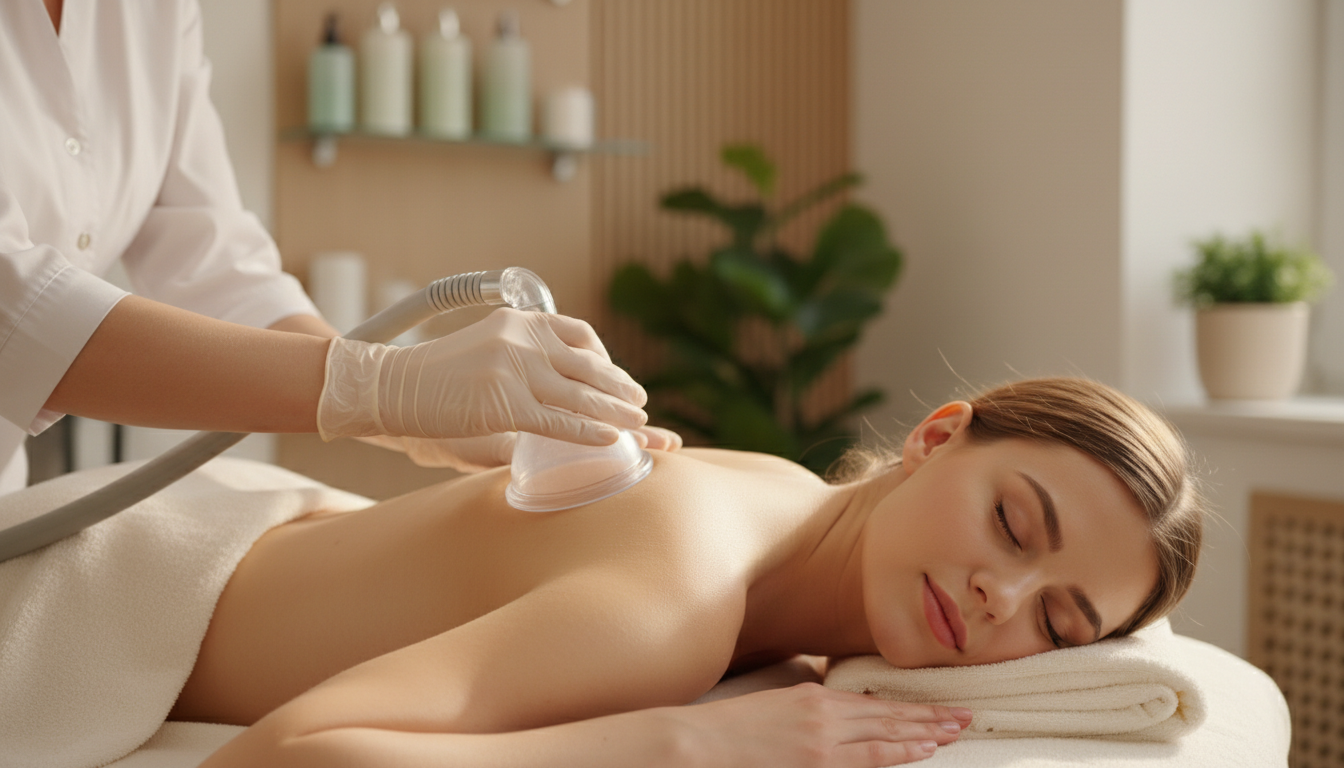
Hardware vacuum massage works in a way that surprises most first-timers. The device does not press deep into the body — it pulls the skin upward, creates a controlled fold, and releases it. That negative pressure changes the rules of a typical massage: instead of compressing tissue, the suction briefly stretches it and lets it bounce back. And because the mechanical action is different, so is the body’s response. The first session often feels strange, and the skin looks flushed right after. That is not a side effect — that is the treatment doing what it does.
Set a realistic goal before your first session
Before you even think about which clinic to visit, decide what you actually want. Vacuum massage is used for different purposes, and the protocol changes depending on the goal.
- Firmer, denser skin — for example, after weight loss, pregnancy, or just with age.
- A smoother, better-groomed texture in the legs, thighs, arms, or abdomen.
- Relief from heavy legs, puffiness, and a feeling of stagnation.
- A regular wellness ritual that keeps the skin and blood flow in good shape.
These are not equal tasks. If you want firmer skin, the treatment needs to be slow and focused on the skin’s reaction. If you want lymphatic drainage, the direction of the movements matters more than the pressure. If you simply want a wellness boost, almost any protocol will do — but you will not see a drastic body change from it.
The main vacuum massage benefits you can realistically count on are better circulation, softer connective tissue, and improved skin elasticity. The skin looks plumper and more even for a period after the session. What vacuum massage does not do is melt fat or remove a meaningful amount of volume. The silhouette may look a little tighter, but the scale will not move.
That is why an honest goal matters: it protects you from disappointment. You are not signing up for a miracle; you are signing up for a procedure that improves the quality of your skin and the comfort of your body.
Check whether vacuum massage suits you
A safe session starts before the device touches the skin. A responsible specialist reviews your skin condition and asks about your medical history. Pay attention to whether that intake actually happens — it is the first sign of professionalism.
You should definitely mention the following:
- untreated varicose veins or known venous insufficiency
- acute skin flares — eczema, psoriasis, infections, sunburn, or open damage
- a tendency to bruise easily or fragile capillaries
- blood-thinning medication
- recent surgery, injections, or injuries in the treatment area
- pregnancy — not automatically a ban, but a signal to discuss the specifics
These do not always cancel the massage. Sometimes they just mean the specialist skips a particular zone or works much more gently. A few conditions, like acute inflammation or advanced untreated vein disease, are a definite no. Ask questions and take the answer seriously.
If the salon cannot point out a single contraindication and is ready to treat everyone in the same way, walk away. Vacuum massage works on blood vessels and connective tissue, and rushed or careless treatment can end in bruises and discomfort that honestly could have been avoided.
Prepare your skin and schedule for the procedure
Vacuum massage preparation is not long, but the small details influence both comfort and the result.
- Arrive with clean, dry skin. Skip body lotions and oils for a few hours before the session. The vacuum glides better over dry bare skin, and rich cosmetics reduce the grip of the device.
- Shave a day before, if you shave at all. Fresh shaving creates micro-irritation; the suction will amplify it. A day of rest fixes that.
- Do not eat a heavy meal right before. You will be lying down during the session, and a full stomach makes that uncomfortable. A light snack is fine.
- Give yourself time. Arrive a few minutes early and do not plan a rushed schedule for after the session. Your body needs a little time to relax and respond.
- Drink water during the day. Well-hydrated skin accepts the pulling more evenly and recovers faster.
Also, wear loose clothing — especially if the session is on the thighs or abdomen. Tight elastic bands and rough seams pressing on the treated skin right after the procedure do not help it calm down.
What happens step by step during a hardware vacuum massage
A typical hardware vacuum massage session lasts 20 to 40 minutes, depending on the area and the goal. Despite the word “hardware”, there is nothing scary in the process.
- Positioning. You lie down or sit so that the working area is relaxed and fully accessible.
- Skin preparation. The specialist cleans the skin and, depending on the technique, applies a thin gliding medium or works on dry bare skin.
- Adjusting the device. The handpiece is placed on the skin, and the vacuum intensity is slowly increased from zero. This is the moment when you realize the pulling sensation is different from any hand massage.
- The main movement. The specialist moves the handpiece in slow continuous lines along the treatment zone. On the body, the direction usually follows the natural lymph flow — towards the groin or armpits. On the abdomen or back, the patterns may be circular or diagonal.
- Monitoring the reaction. A good specialist watches the skin as they work. In places where the skin is thinner — inner thighs, ankles, inner arms — the pressure may be lowered automatically.
- Finishing pass. The end of the session usually includes slower, lighter movements to calm the skin. After that, you get up slowly and look at the reaction in the mirror.
At no point should the device stay still in one spot for a long time. Standing still is the classic cause of bruises. The whole treatment is continuous, rhythmic, and controlled.
Decode the sensations so you know when to speak up
You need a realistic idea of what “normal” feels like during a vacuum massage, because some sensations are strange even when everything is fine.
The pulling itself is strong. The skin is being lifted and folded into the handpiece, so expect a grip that feels like a suction cup moving across your body. Along with that, warmth builds up in the treated zone — that is the blood flow responding. In dense areas, for example along the outer thighs or the sides of the abdomen, you may feel a short-term sting that passes quickly.
Here is what is never normal:
- sharp stabbing pain,
- a burning feeling in one point,
- the sensation of the skin being tweaked hard,
- numbness.
These are signals to speak up. You do not need to endure them. The specialist can reduce the pressure in seconds and the session will continue comfortably.
Remember the simple rule: a comfortable pull is fine; sharp pain means stop and adjust.
Right after the session, redness is expected. The skin may stay pink for a few hours. Small bruises can appear even with proper settings, especially if you have sensitive capillaries. They fade in a few days and are not a sign of harm. But if the technician hurts you during the session, that is not “working well” — that is a problem.
Help your skin recover after the session
Vacuum massage aftercare comes down to supporting the skin while it returns to calm. The session stretched it, flushed it with blood, and gave the connective tissue a workout. Recovery is what turns that work into a visible result.
- Moisturize after a few hours. A light fragrance-free body lotion helps the skin feel comfortable and supports its barrier.
- Drink water. The treatment activates circulation and lymphatic activity, and hydration helps the tissue settle down.
- Let the area rest from exercise. Walking is fine, but intense training, running, or cycling involving the treated zone should wait about a day.
- Avoid strong heat. A sauna, hot tub, or prolonged sun exposure is better postponed until the next day.
- Do not scrub. A gentle shower is fine; aggressive rubbing or exfoliating the treated area is not.
- Leave any bruises alone. Do not massage them or apply heat. The body will reabsorb them in a few days.
If the specialist gave you specific instructions for your session, follow those. These general tips cover the common cases, but your skin may need a particular approach.
See the result and plan the next session
One procedure gives a pleasant but short-lived effect: the skin feels more toned, the area feels light, the silhouette looks slightly improved. After a few hours, part of that feeling fades. This is normal, and it does not mean the session failed. It means the tissue needs repetition to hold the change.
A realistic picture of vacuum massage results depends on your goal.
- Firmer skin. The texture and elasticity improve gradually. The effect is visible in the smoothness and tone of the skin, not in a sudden change in the mirror.
- Support for body contouring. The treated zone looks tighter and better defined, especially in combination with healthy habits. The change is subtle and cumulative.
- Heavy legs and puffiness. This responds the fastest. A feeling of lightness can appear after the first few sessions.
Most protocols are designed as a series — usually one or two sessions per week for several weeks, followed by maintenance. The specialist should tell you the plan based on your reaction, not sell you the maximum package upfront. Changes usually become noticeable after the first few sessions, and the full result is assessed after the whole series.
Consistency matters more than intensity. A moderate, regular course produces a better outcome than one very aggressive session. And if in the middle of the plan you feel that the result is not what you expected, say so — the intensity, the pace, or the working area can be adjusted.
This brings us back to where everything starts. Hardware vacuum massage is a predictable procedure when you treat it as a process, not a trick. You want to know what it does to the skin, confirm that it is safe for you, prepare honestly, cooperate with the sensations, help the skin recover, and give the result time. That sequence is the whole method. And it is exactly what makes the difference between a single strange experience and a lasting improvement you can actually see.
