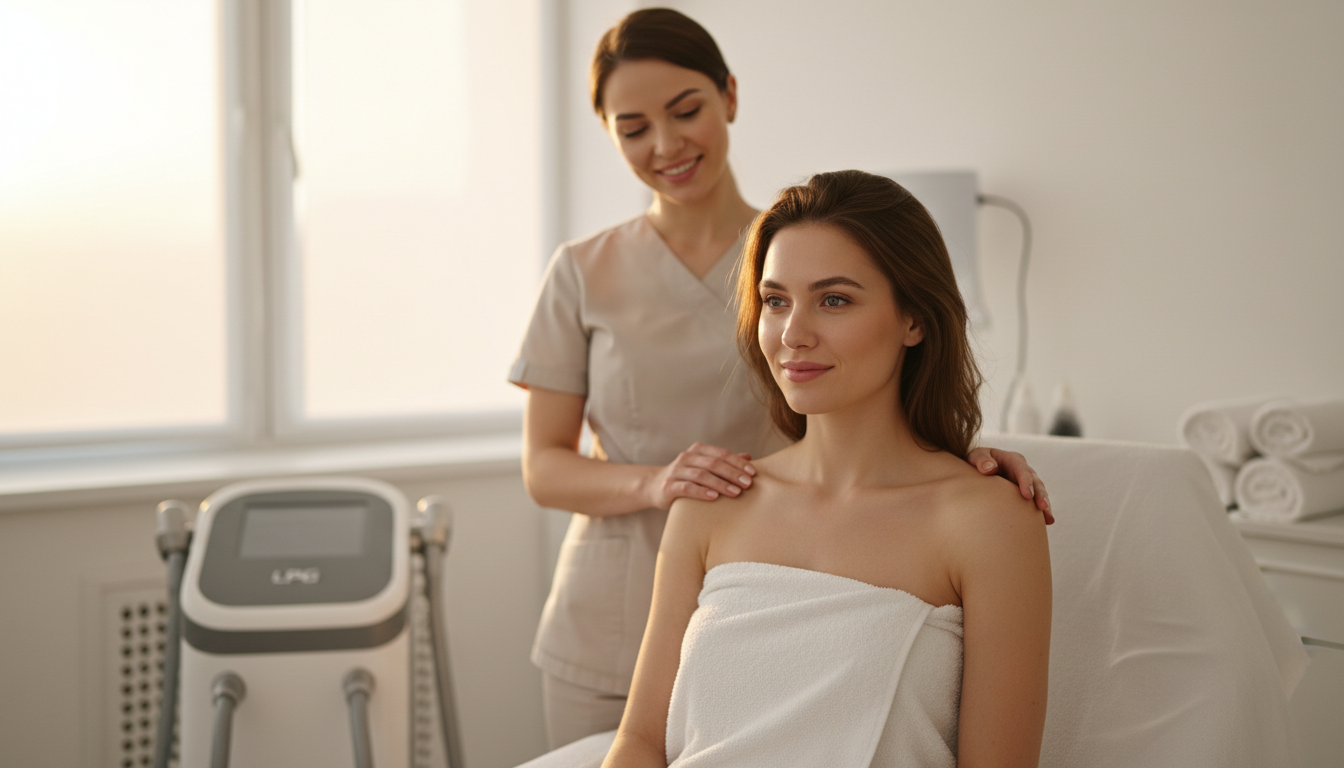
Picture this: you have just booked your first LPG hardware massage and are not sure what happens next. You've seen the promises, browsed the before-and-after photos, and now you're standing in front of the real question: what actually happens in the treatment room?
That gap in knowledge is normal. LPG hardware massage — also sold under the name Endermologie — is a machine-based treatment, and it doesn't feel like a standard massage. This guide walks you through the entire process: what it's for, how to prepare, what you'll feel minute by minute, and how to care for your body afterward. By the time you finish reading, you'll know exactly what to expect.
What LPG hardware massage is for
LPG hardware massage targets the layers of tissue underneath the skin: fat, connective tissue, and skin fibers. The approach was first developed in France and is now best known as Endermologie. If you see "Endermologie treatment" on a clinic's price list, it's the same technique. During a session, a specialist moves a handpiece across the body while the machine lightly grips a fold of skin and rolls it between two rollers. This mechanical action stimulates blood flow, promotes lymphatic drainage, and encourages the cells that produce collagen to become more active.
The main reasons people book it are body contouring and visible reduction of cellulite. It's also used to improve skin elasticity and to reduce a puffy, heavy feeling in the legs. A common comparison is a "workout for the skin" — ordinary massage works the muscles, while this treatment works the tissue that holds everything in place.
To keep expectations realistic, here's a direct comparison of what LPG hardware massage can and cannot do:
| What LPG hardware massage can do | What it cannot do |
|---|---|
| Improve skin elasticity and texture on the treated areas | Cause significant weight loss on its own |
| Help soften the visible appearance of cellulite over several sessions | Remove large or deep fat deposits that need surgical treatment |
| Stimulate lymph flow and reduce a swollen, heavy feeling | Replace a healthy diet and regular movement |
| Support connective tissue gradually over a course | Give permanent results after a single visit |
The short version: LPG hardware massage is a conditioning treatment, not a weight-loss procedure. It can make skin feel firmer and look smoother, but it's not a substitute for the basics of eating well and moving your body.
Another important point: visible results come in stages, not in a single appointment. Specialists usually plan an initial series of sessions to build the tissue response, evaluate progress, and only then adjust the protocol. The exact rhythm depends on your body and your goal, so the smartest approach is to have that conversation before you commit to a large package.
What to do before your LPG hardware massage
The session itself does the work, but what you do beforehand influences both your comfort and how your body responds. No complicated routine — just a few deliberate choices.
Pre-session checklist
- Drink water. Hydrated tissue responds better to mechanical work, and the treatment encourages your body to move fluids. Arriving dehydrated makes the session less comfortable. Bring a bottle with you and sip it on the way home as well.
- Have a light meal an hour or two before. You don't need to fast, but a heavy meal in your stomach can make lying in certain positions awkward. Something simple — fruit, yogurt, a small sandwich — is enough.
- Keep your skin clean and bare. Skip body lotion, oil, and self-tanner on the day of the treatment. The rollers work through a special suit, and any residue on the skin can affect the grip. A normal shower is all you need.
- Wear comfortable clothes. You'll change into a treatment suit at the clinic, so there's no dress code — just choose something easy to change in and out of. Leave the tight jeans and long boots at home.
- Leave heavy jewelry at home. Rings, bracelets, and necklaces get in the way during the session and are easy to misplace.
- Tell the specialist about your health situation. Pregnancy, varicose veins, skin infections, recent surgery, blood-clotting issues, and heart conditions all matter. Some of them rule out the treatment; others change how it's performed. This is a few minutes of conversation that can prevent a completely avoidable problem — don't hold back.
The LPG session step by step
Now to the part you've been wondering about: what it actually feels like. Here's how a typical LPG massage session progresses, from the changing room to the final lift of the handpiece.
You change into the treatment suit. The specialist gives you a close-fitting bodysuit made of elastic fabric. It looks like a thin wetsuit. The suit is essential — the handpiece needs to glide smoothly over the body, and the fabric protects your skin from direct friction and pinching.
You lie down and the machine starts softly. The specialist positions you on the table and begins with low pressure. That's intentional: your body needs a minute to adapt to the unusual sensation before the intensity comes up.
The rollers begin to work. The handpiece moves in slow, overlapping paths across the treated area. You'll feel a pulling, kneading, and suction-like rolling sensation — deep and mechanical, very different from a hand massage. The first few minutes often feel strange; then most people start to relax into the rhythm.
The specialist adjusts as they go. Different areas need different pressure. Lighter settings are typical for sensitive zones, while thighs and hips can usually take more. The specialist also varies the direction and size of the rolls to reach the tissue evenly. This is the moment to use your voice: if something feels sharp, say so. Adjusting the machine takes seconds, and your feedback makes the session both safer and more effective.
You let the treatment work. Once the novelty wears off, the session settles into a steady rhythm. The machine makes a rhythmic sound as the suction engages and releases; after a few minutes, it fades into background noise. A session usually lasts around 30 to 45 minutes, depending on the size of the area and the clinic's protocol. When the handpiece lifts off, your skin may feel warm, slightly tight, and a little pink — a normal sign that the tissue has been worked.
Normal sensations, after-effects, and when to say no
First-timers often fear pain, so let's separate what's normal from what's a red flag.
Normal sensations
- A deep pulling and tugging feeling on the skin — that's the machine doing its job.
- Warmth in the treated area, caused by increased circulation.
- Mild soreness hours later, similar to the feeling after an unusual workout. It usually fades within a day or two.
- Temporary redness or pinkness of the skin during and right after the session.
Signs that something needs to change
- Sharp or stabbing pain at any point during the session. This is never "good pain."
- Bruising that appears immediately in the treated area — a light red mark is common; a bruise is not.
- Dizziness or nausea during or after the treatment. Tell the specialist right away.
Uncomfortable pulling is part of the treatment; sharp pain is not. There's no badge of honor for enduring pain during an LPG session — say something, and the specialist will reduce the intensity in seconds.
It's also worth knowing that the same session can feel different on different parts of the body. The inner thigh, the outer hip, and the abdomen each respond in their own way. Asking for lower pressure on a specific spot isn't a failure — it's simply how the treatment is meant to work.
When LPG hardware massage is not for you
The treatment is non-invasive, but it moves fluids and tissue intensely. That's why contraindications exist. A responsible clinic will ask about these before booking you in, and you should expect questions about:
- pregnancy, especially when treating the abdomen and back;
- varicose veins or a history of blood clots in the area;
- active skin infections, inflammation, or wounds;
- a hernia or recent abdominal surgery;
- a serious cardiovascular condition.
This list doesn't replace medical advice — it just gives you an idea of what a professional should ask. If a specialist skips these questions, treat it as a warning sign. When in doubt, the responsible move is to check with your doctor before booking a session.
Aftercare and how to keep the results
Your first session is done. Now the result depends on what you do outside the treatment room.
Right after the session
- Keep drinking water. The treatment mobilizes fluids, and your body needs water to flush them out. This simple habit supports the entire process.
- Avoid intense exercise on the treated area for the rest of the day. The tissue has been deeply worked; it needs time to recover. A gentle walk is fine — a HIIT class can wait until tomorrow.
- Don't judge the result on one session. Immediate effects are subtle. The first visit prepares the tissue, and visible changes accumulate over a course.
The maintenance pattern
LPG hardware massage is designed as a course, not a single event. At the start, sessions are usually spaced closely together. The specialist will recommend a rhythm based on your goals and how your skin reacts. After the initial series, the focus shifts to keeping the result with occasional maintenance visits and longer gaps between sessions.
The best results appear when LPG massage is part of a broader routine — regular movement, enough sleep, balanced food, and consistent skin care. The treatment supports those habits; it doesn't replace them. And the same rule applies to the course itself: the results you keep are the results you maintain.
Now you have the complete picture — what LPG hardware massage is for, how to prepare, what a session feels like, what to watch out for, and how to care for yourself afterward. The guesswork is gone. When you walk into your first session, you'll know exactly what's coming, what to communicate, and what to do next. A first appointment is no longer a leap into the unknown — it's the start of a process you now understand.
